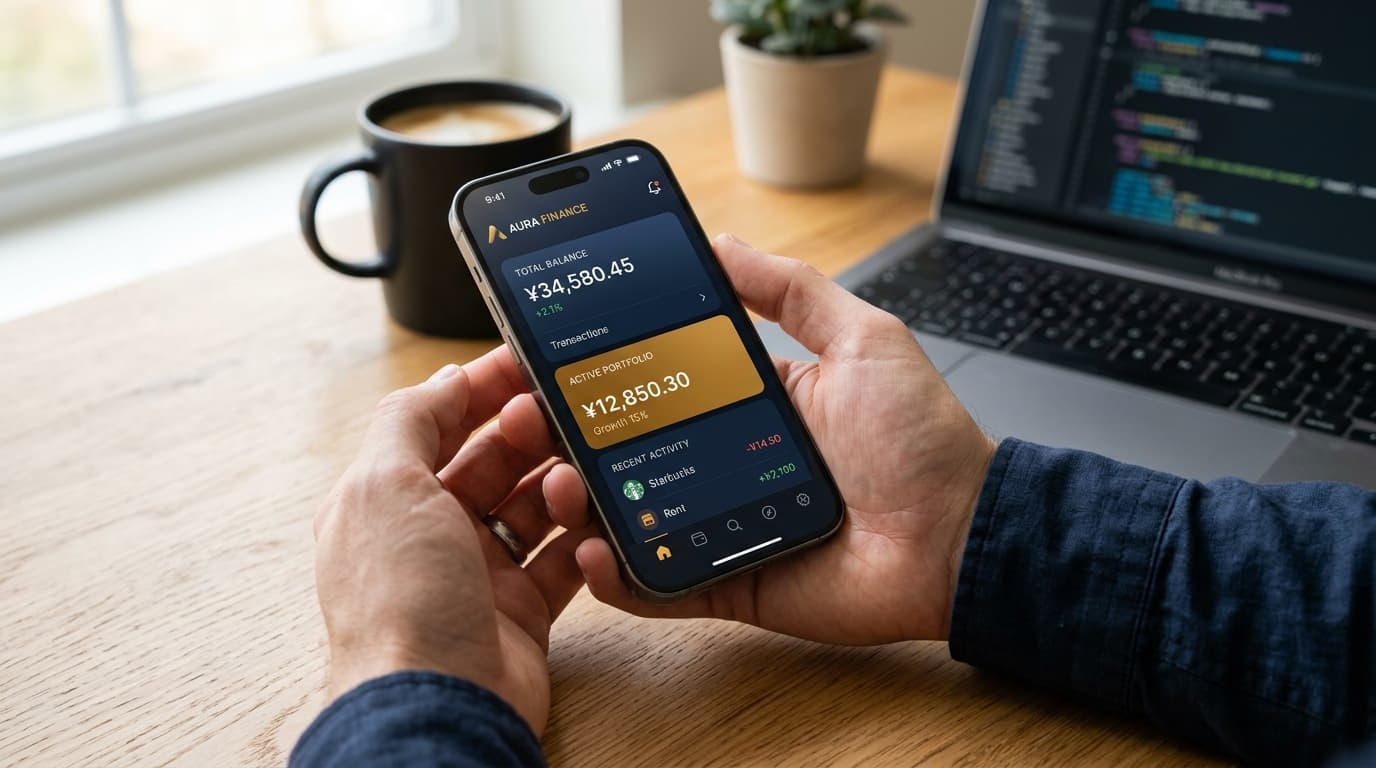
In Morocco, the smartphone has become the primary gateway to the digital world. From on-demand delivery and internal management tools to e-commerce and financial services, Moroccan enterprises are investing heavily in mobile apps to build customer loyalty and drive commercial expansion.
Whether you are an ambitious startup in Casablanca, an industrial company in Tangier, or an established retail brand in Rabat, Marrakech, Fes, or Agadir, having a dedicated mobile application fundamentally elevates how you engage with your customers.
However, launching a mobile project involves strategic decisions: What budget is required for mobile app development in Morocco? Should you build native iOS and Android apps or choose a cross-platform framework like Flutter? And how do you ensure high user retention?
This comprehensive guide details the real costs, key technical decisions, and best practices to make your mobile app project a success in 2026.
1. Why Build a Mobile App for Your Moroccan Business?
While an optimized website is essential for Google search discovery, a mobile application provides unmatched advantages for retention and sales conversion:
- A Direct Communication Channel via Push Notifications: Instantly notify your customers of flash sales, new product drops, or order status updates. With open rates between 30% and 40% (compared to under 15% for email), push notifications are the most effective re-engagement channel available.
- Smooth User Experience & Offline Capabilities: Mobile apps cache essential data locally, delivering instant responsiveness even over inconsistent 4G network coverage.
- Prime Real Estate on Your Customer's Home Screen: Having your app installed directly on your customer's device reinforces brand recall and dramatically increases interaction frequency.
- Direct Access to Native Device Hardware: Live GPS tracking, camera barcode scanning, biometric security (FaceID / TouchID), and seamless mobile payments.
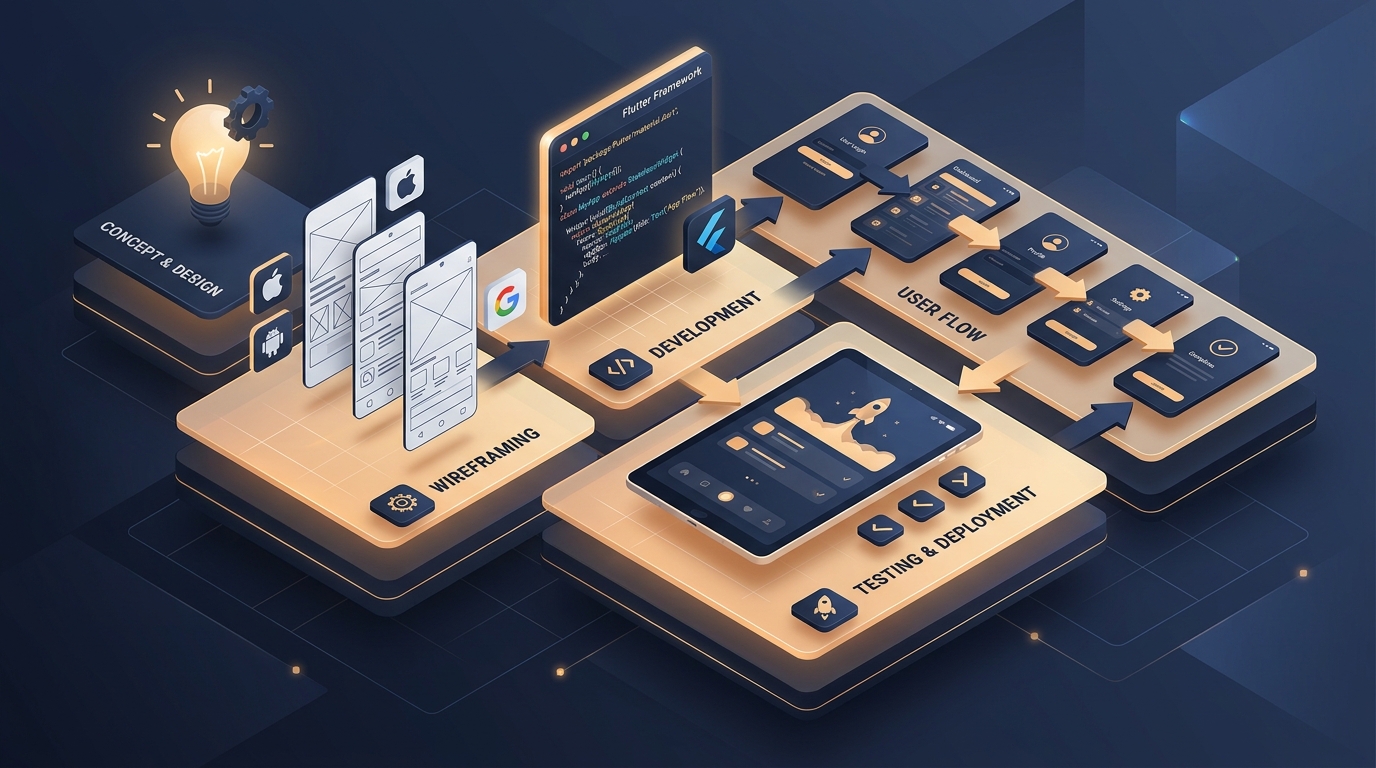
2. Choosing the Right Technology in 2026: Native vs. Cross-Platform (Flutter & React Native)
Traditionally, building mobile applications meant coding two completely separate codebases: Swift for Apple iOS and Kotlin/Java for Android. This approach doubled development budgets and created ongoing maintenance burdens.
In 2026, Cross-Platform Development with frameworks like Flutter has become the leading industry standard for Moroccan businesses:
- A Single Codebase for Both Stores: Powered by Google's Flutter or Meta's React Native, your app runs identically and natively on both iPhone and Android devices.
- True Native-Grade Performance: Unlike outdated webview wrappers, Flutter compiles directly into native ARM machine code at a silky-smooth 60 or 120 FPS.
- 40% to 50% Cost Savings: Faster time-to-market, halved development timelines, and synchronized app updates released concurrently across the App Store and Google Play.
3. Four Key Success Factors for the Moroccan Market
Publishing an app on app stores is only the first step. To thrive in Morocco, your application must align with local consumer habits:
- Clean, Intuitive UI/UX Design: Moroccan users demand speed and clarity. One-thumb navigation, minimal friction, and bilingual English/French/Arabic interfaces maximize daily retention.
- Local Payment & Communication Integrations: Secure Moroccan bank card processing (CMI), instant SMS OTP verification, and embedded WhatsApp support triggers.
- Lightweight App Size: Keep initial download size under 25 to 30 MB to encourage spontaneous downloads without burdening mobile data or user phone storage.
- Autonomous Admin Dashboard: A user-friendly back-office empowering your operational team to manage orders, products, users, and push notification campaigns without technical assistance.
4. How Much Does Mobile App Development Cost in Morocco?
Project pricing depends on functionality, third-party integrations, and technical scale:
- MVP / Simple Business Tool (15,000 MAD to 30,000 MAD): Interactive showcase app, connected digital catalog, or internal workflow app with administrative dashboard.
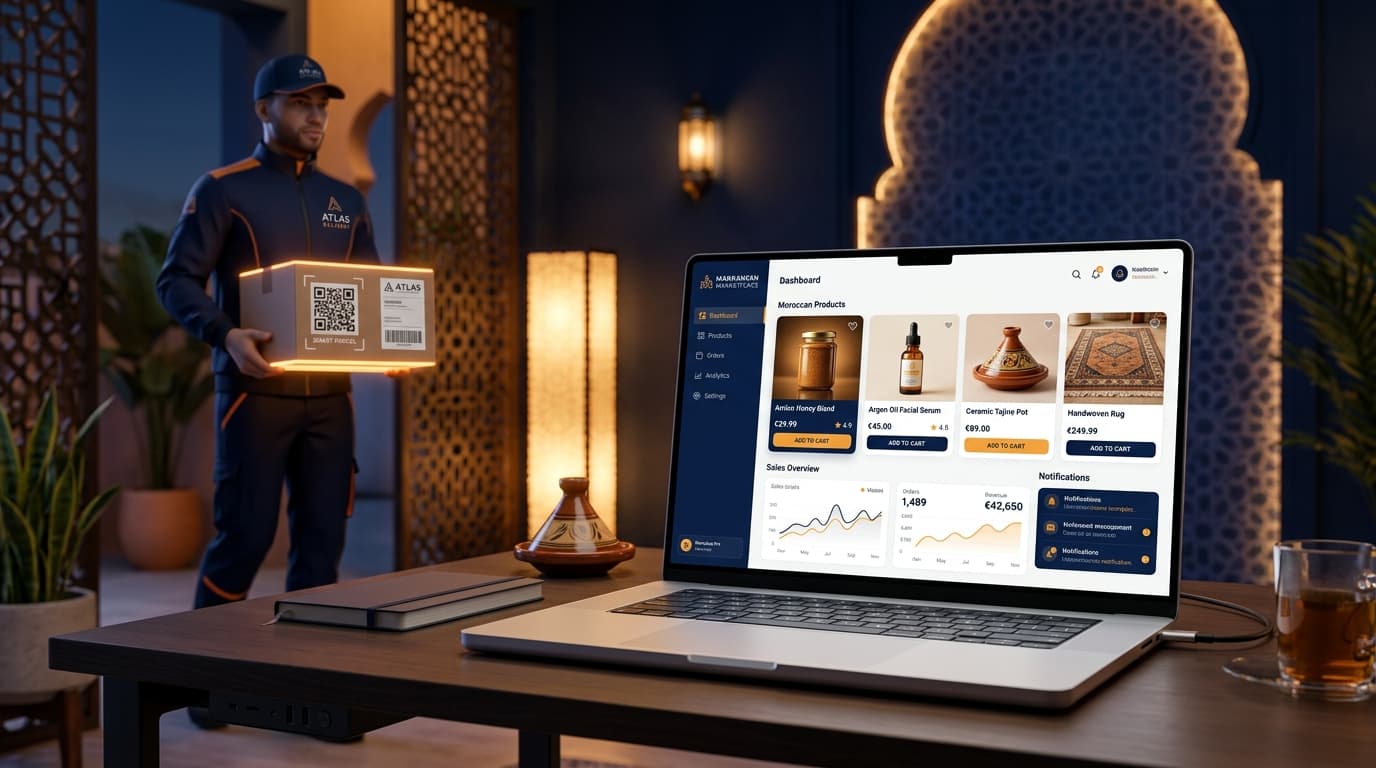
- E-commerce / Delivery Service App (30,000 MAD to 60,000 MAD): In-app checkout, CMI payment gateway, real-time driver GPS tracking, automated push notifications, and multi-status order management.
- Custom Mobile Platform & Complex SaaS (Starting from 60,000 MAD): Multi-sided platforms (ride-hailing, fintech, digital health), custom algorithms, high concurrency, and strict CNDP Moroccan data compliance.
5. Build Your Mobile App with WebHive.ma
At WebHive, we partner with Moroccan businesses, brands, and startups to build high-performance mobile applications designed to perform:
- High-Performance iOS & Android Engineering: Expertise in Flutter and modern Node.js/cloud backends for lightning-fast, scalable mobile solutions.
- Transparent Fixed Pricing: Clear milestones and upfront quotes with zero unexpected surprises along the way.
- End-to-End Delivery: From initial UI/UX wireframing and user testing to official store submission and validation on both Apple App Store and Google Play.
Conclusion
In 2026, a tailored mobile app is the most powerful lever to cultivate customer loyalty and solidify your market leadership in Morocco.
Ready to launch your custom mobile application?
👉 Connect with the WebHive team and bring your custom mobile application to life today.